To build on the
ideas and energy of the Best Practices Conference
in June 2001, Global Partners invited member schools -- individually
and in groups -- to propose projects on their campuses that would investigate
new models for international education. The task force gave financial
support to eight projects. Follow the links below to see reports of
their work.
Use the title links
or scroll down for brief descriptions of the projects names of contact
people. Use the "report" links to go directly to the
project reports.
Educational
Information and Advisory Exchange
Birmingham-Southern,
Centenary, Hendrix and Millsaps Colleges
Go
to the project report
During the 2001-2002
academic year, these four schools worked collaboratively to bring three
to six educators from South America to visit each of their campuses
to share educational, advisory and cultural information. By introducing
the visiting faculty to their institutions, they hoped to build connections
between educational institutions in the southern United States and in
Latin America. Each participating institution hosted the visiting educators
for two days. Educators met with students, faculty and staff to exchange
information about their educational systems -- its areas of strength
and weakness, opportunities for collaboration and common goals. Hosts
also reached out to the wider community to include local educators and
community exchange organizations as part of the visit itinerary. Contact:
Lyn Fulton John, Director, Center for International Initiatives, Millsaps
College, fultol@millsaps.edu.
Coming
and Going: Intercultural Transitions in a Liberal Arts Context
Carleton College
Go
to the project report
Every student experiences
cultural change, as they leave home and join a "college culture." Drawing
on that common experience, Carleton produced a videotape and booklet
that teaches about transitions between cultures, to be used in the college's
new Cross Cultural Studies course. The tape focused on Carleton's
new student week, illustrating how all students experience intercultural
transitions from home to college, and for many, from one ethnic or national
culture to another or several. The film illustrated that understanding and navigating such intercultural
transitions is a part of a liberal education.
They continued their work through 2003 with support from Global
Partners.. Contact: Petra Crosby, Director of International Student
Programs, Carleton College, pcrosby@carleton.edu.
Global
Semester Program
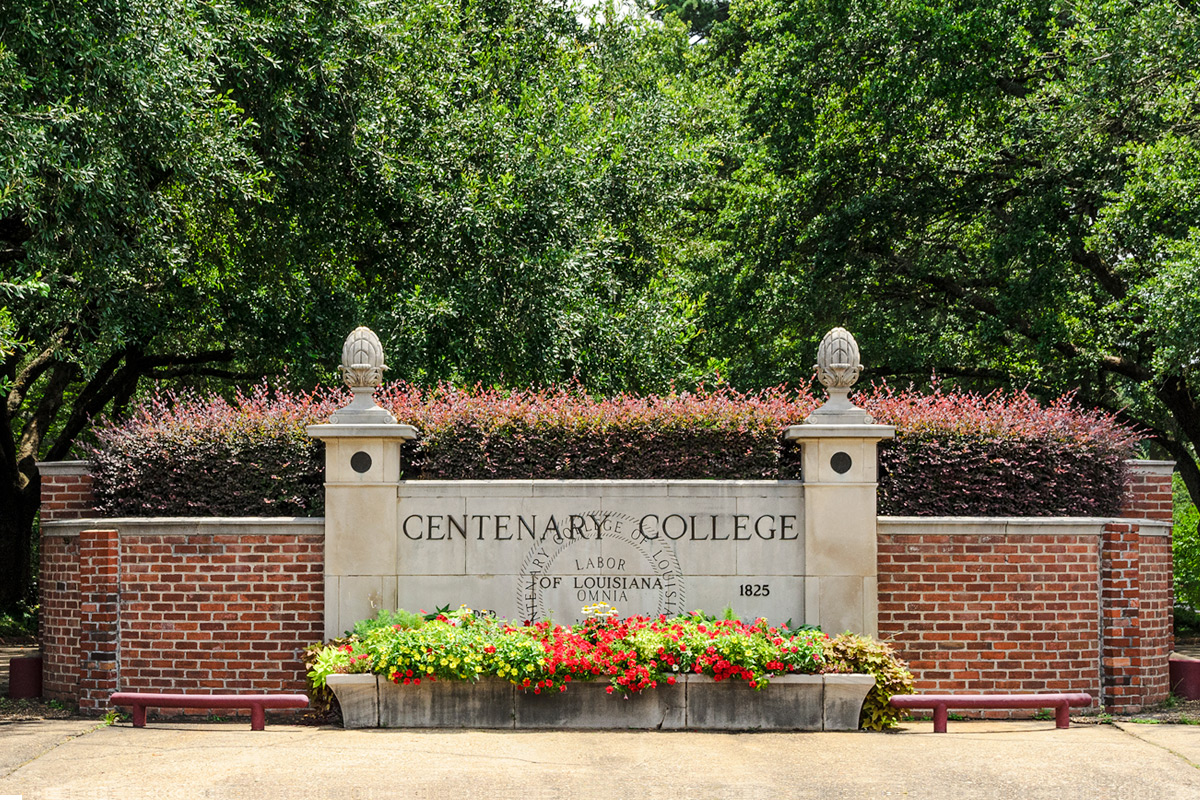
Centenary College
Go
to the project report
While many students
participate in Centenary's short-term travel-study courses in May, some
faculty are concerned that they only scratch the surface of the visited
culture. In an effort to address these concerns, the college designed
a program where regularly offered semester courses culminated in
a short-term overseas study experience. Every faculty member at Centenary
was invited to consider how his or her course could be enhanced
by a follow-on trip. Contact: Dr. David Havird, Associate Dean
of the College, Centenary College, dhavird@centenary.edu.
Collaboration
in Orientation/Reorientation Programming for Exchange Students
Coe and Monmouth
Colleges
Go
to the project report
Both colleges are
expanding their exchange relationships with institutions in Europe and
Asia, but the total number of exchange students on each campus is small.
Orientation and reorientation programs (for both Americans going abroad
and international students coming to America), however, require a critical
mass. In this project, the colleges held joint one-day orientation/reorientation
programs; by combining efforts, Monmouth and Coe were able to pool resources
and ideas while increasing the number of students participating in an
orientation/reorientation program. In this program, newly arrived international
students are a resource for Americans going abroad. They continued
their work through 2003 with support from Global Partners. Contact:
Thomas Sienkewicz, International Studies Coordinator, Monmouth College,
toms@monm.edu.
Languages
Across the Curriculum
Davidson College
Go
to the project report
Foreign language
competency is an essential part of internationalizing a liberal arts
education. One new model for improving foreign language teaching is
studying languages across the curriculum. Borrowing a model from St.
Olaf College (another Global Partner school), Davidson hopes to develop
the languages across the curriculum idea on its campus. They brought
St. Olaf and Davidson faculty together to explore how to use the model.
Contact: Homer Sutton, Professor of French and Director of the
Dean Rusk Program in International Education, Davidson College, hosutton@davidson.edu.
Student
Symposium in Global Citizenship
Lake Forest
College
Go
to the project report
To give focus to
student study abroad programs, and to allow students to share their
experiences abroad with the campus community, Lake Forest organized
a symposium on global citizenship. Students bound for study abroad were
given global citizenship-oriented questions to investigate while undertaking
their studies abroad, and on return presented reports on issues of global
citizenship as viewed in different cultures. International students
on campus shared their perspectives on their American experience with
the campus community, and gave presentations on issues in their own
countries. The college continued this program through 2003 with
support from Global Partners. Contact: Robert Archambeau, Department
of English, Lake Forest College, archambeau@lakeforest.edu.
Break
on Through to the Other Side: Integrating Intercultural Experiences
into the Liberal Arts Tradition
Lawrence and
Southwestern Universities
Go
to the project report
A working group
of faculty and administrators from both campuses met to critically examine
the pedagogical rationales currently informing intercultural study programs
on their campuses and at other liberal arts institutions in order to
revisit the central philosophical questions and seek to define the educational
value of intercultural experience in terms of the U.S. small liberal
arts college tradition. This work served as preparation for drafting
mission statements for intercultural education at Southwestern and Lawrence,
as well as for developing specific evaluative criteria grounded in the
educational goals of those institutions. They continued their work
through 2003 with support from Global Partners. Contact: Susan
Mennicke, Director, Office of International Programs, Southwestern University,
mennicks@southwestern.edu.
International
Service-Learning
Rhodes College,
St. Olaf College, and Southwestern University
Go
to the project report
Each of the three
schools involved have considerable experience in service-learning programs
and in study-abroad programs. They pooled their experience by investigating
a potential joint service-learning site in Honduras and organizing a
seminar to discuss the pedagogy of service-learning, the special problems
of international service-learning, the connection between domestic and
international service-learning, and the place of service-learning in
the liberal arts curricula of the three institutions. They continued
their work through 2003 with support from Global Partners. Contact:
Rick Fairbanks, Project Coordinator, St. Olaf College, fairbank@stolaf.edu.